          |
   |
|||||||

| |||||||
 |
|||||||
|
Articles in this Issue:
Spring into Historical Estates Gardens
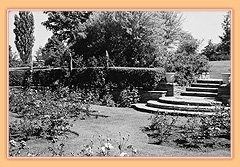
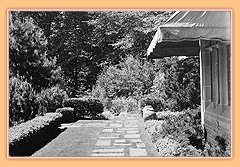
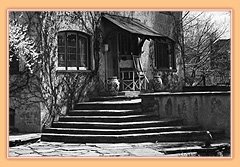
The elegance of McLean House continues outside the building with Culham's formal garden, which includes a circular fountain, and magnificent greenery. The more informal gardens surrounding the Vaughan Estate blend into the extensive grounds of the Don River Ravine. The Gardensā stone pathways and tiered patios are accessible through both McLean House and The Vaughan Estate, and despite the encroachment of civilization, they remain virtually unchanged since their original design. The Gardens are ideal for spring and summer functions. With over 52 lush green hectares, the Gardens provide plenty of space to enjoy. So, make sure to include time for a Garden tea, bar-b-que, or friendly game of croquet or baseball at your next social and special corporate event at the Estates of Sunnybrook.  Meeting Marketing: The Meeting Professional suggests the "5 P's" Statistics show time is the one thing, that most people need more of in today's busy corporate world. This means that executives and managers are more selective in the meetings and corporate functions they attend. Meeting planners are constantly on the lookout for more creative ways of enticing delegates to their meetings and functions. Consider the "5 P's" when planning your next meeting. Product: Think of a meeting as a product and target it the same way you would any other product at a specific audience. Always consider the needs of your audience, and add a few extra benefits such as a mentoring or networking session. Don't be afraid to use surveys, phone interviews or focus groups as a way to gauge your audience's needs at the planning stage. Price: Creative pricing strategies are a key way to increase attendance. Try an all-inclusive registration package or discounts for first time attendees. Remember to capitalize on new technology and offer Internet registration. Promotion: Your campaign should centre on the benefits of attending, but be creative. Everyone is tired of the same old packaging, so try something different to grab your potential attendee's attention. Teaser postcards, theme specific involvement devices and testimonial e-mails, all let the attendee know that they can expect an exceptional meeting. Persistence: Try something new, and let the idea sit with the delegates. It sometimes takes a little while for delegates to adjust to a new idea, but most meeting planners agree that what was once a new idea becomes a tradition very quickly. Place: Last but not least, location, location, and location. Seek out a location that is a little out of the ordinary, and one that provides areas for working and for networking. A versatile venue combines access to a boardroom and a more casual meeting area. During the warmer weather nothing is more attractive than some green space at the meeting facility. It allows attendees a place for a breath of fresh air during the conference, and allows the meeting planner to include outdoor activities as part of the event. Meetings are an investment of time and resources, and the right location revitalizes any meeting or conference. Make Your Handouts Stand Out No meeting or corporate function is complete without handouts or information packages. But how many of these actually make it back to the office? Here are 5 ways to ensure that your handouts leave a lasting impression.
Be goal oriented: Decide what it is you are trying to accomplish and then design your handout around your goal. Don't overwhelm with information: Just because you have the information, doesn't mean you have to use it. Everyone appreciates the concise approach, so only include information that directly pertains to your message. Use graphics: A picture is worth a thousand words and in a handout a graph or chart, especially in colour, is worth even more. People are more likely to study a chart than they are to read text. White space is good: Leave wide margins and room for notes. The general rule is to use no more than two-thirds of the page for information and graphics. Combine form and function: Make sure your handout is attractive and well organized. Impress your reader at first sight because a well-produced handout can make the difference between a good presentation a great presentation. Handout Helper: Handouts are frequently discarded because people have no place to put them in their already overcrowded offices. To avoid such a fate for your handout, distribute it in a pre-labeled file folder. This encourages clients, co-workers and customers to keep the material, and makes it easy to locate when they want to review the information. It's Time to Green Your Meeting In the spring, everyone becomes more aware of the environment. Here are a few easy ways to make your meetings more environmentally friendly.
|
|||||||
|
To view the Agenda, click on the appropriate issue below:
Winter 2002 | Spring 2001 | Winter 2001 | Winter 2000 | Fall 1999 | Spring 1999| Winter 1999 | |||||||

Revenues generated from the Estates contribute to further research at
Sunnybrook & Women's College Health Sciences Centre.